


















Introduction: The Cultural Phenomenon of Sakura Town
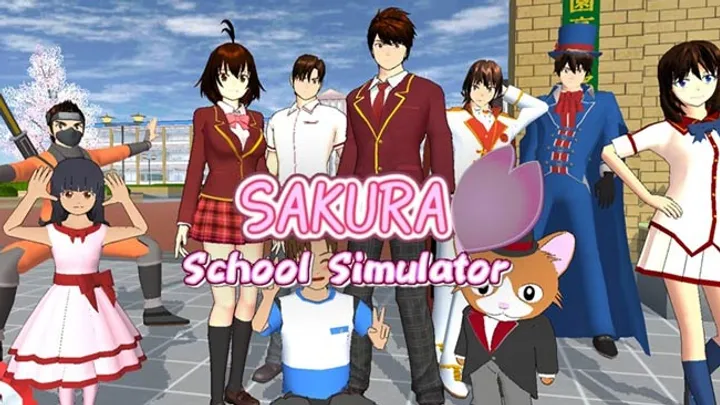
"SAKURA School Simulator" is more than just a game; it is a sprawling, chaotic, and incredibly creative digital playground. Developed by Garusoft Development Inc., it has maintained its position as a top-tier simulation title well into 2026. Set in the fictional, ever-expanding Sakura Town, the game offers a unique blend of Japanese high school nostalgia and surreal, "fantasistic" action.
Whether you are attending a math class, fighting off a Yakuza raid, or flying over the town with a jetpack, the game provides a level of freedom rarely seen in mobile titles. This review explores the mechanics, the recent 2026 updates, and why this "weird and wonderful" world continues to captivate over 100 million players globally.
Publisher and Development: The Garusoft Legacy
The game is developed and published by Garusoft Development Inc. (Garusoft LLC), a small but dedicated Japanese studio. Throughout 2025 and into early 2026, Garusoft has focused on Version 1.047.x, which brought significant technical overhauls.
Interestingly, while Garusoft remains the primary developer for the global version, a specialized "Chinese Version" (樱花校园模拟器) is localized by Pujia Studio and published via 233 Leyuan. This version often features exclusive cosmetics, though it adheres to stricter content regulations (such as reduced violence). In 2026, the developer has shifted focus toward Prop Editing and Environment Customization, allowing the community to essentially build their own game worlds within the engine.
Core Gameplay Loop: Freedom Without Limits
The beauty of SAKURA School Simulator lies in its lack of a "Game Over" screen. The loop is entirely player-defined:
- The Social Path: Build "Reputation" and "Intelligence" (IQ) by attending classes and interacting with over 100 unique NPCs. High IQ levels unlock specialized dialogue and make it easier to form "Lover" or "Best Friend" relationships.
- The Chaos Path: Engage in combat using a bizarre arsenal—from katanas and shotguns to magical wands.
- The Concept of Death: A defining mechanic is that no one truly dies. NPCs who are defeated simply "faint" and reappear the next day at 7 AM, though they will carry a "Hate" status toward the player, leading to persistent world consequences.
Advanced Customization: The 2026 "Make-up" Era
Character customization has reached a new peak in 2026 with the introduction of the "New Face" system.
- Makeup and Expressions: Players can now apply detailed makeup, change skin tones, and use expressive eye styles (like "Heart" or "Star" eyes).
- Costume Diversity: The wardrobe has expanded to include everything from traditional Kimonos and Winter uniforms to "Idol" outfits and "Cat Butler" suits.
- Prop Item Editing: Players can now attach items directly to their characters' hands or bodies (like teddy bears, cameras, or backpacks), a feature that has significantly boosted the game's popularity among content creators on TikTok and YouTube.
Exploration: Beyond the School Gates
Sakura Town in 2026 is a vibrant, multi-layered environment. Key locations include:
- The Academic Hub: The high school itself, complete with classrooms, a rooftop, and a gym.
- The Commercial District: Featuring a Cat Cafe (added in late 2024/2025), a Ferris wheel, luxury apartments, and the Yakuza office.
- The Supernatural Side: Locations like the Shrine (where you can revive fainted NPCs) and the Castle add a touch of Japanese folklore and mystery to the mundane school setting.
Combat and Missions: Strategic Schooling
The combat mechanics are simple but surprisingly deep when combined with the game's physics.
- Enemy Variety: You’ll face everything from rival students and the "Yakuza Sunflower" gang to giant monsters and rogue robots.
- Weaponry: Use the "Jetpack" for aerial superiority or "Magic Circles" for area-of-effect damage.
- Status Effects: Managing your character's Mood and Hunger is vital; a bad mood can prevent you from making friends, while hunger reduces your combat efficiency.
The Prop System: A Game Within a Game
One of the most significant evolutions in SAKURA School Simulator is the Prop Editing System.
- Building Mode: Players can spawn hundreds of objects (furniture, walls, vehicles) to build custom houses or obstacle courses.
- Prop IDs: The community has created a massive library of "Prop IDs"—codes that players can share to visit each other's custom-built locations. In 2026, this has turned the game into a semi-creative platform similar to Roblox.
Visuals and Art Style: Anime Immersion
The game uses a bright, high-contrast anime aesthetic.
- Graphics Quality: While it retains its signature "low-poly" charm, the 2026 updates have introduced Smooth Face Shading and improved lighting, making the characters look much more like modern anime figures.
- Fluid Animation: Movements like dancing, flying, and specialized combat poses have been refined, contributing to the "meme-worthy" nature of the gameplay that keeps the community active.
Audio and Atmosphere: The Sounds of Sakura
The audio design balances peaceful school life with high-octane action.
- Dynamic Music: The soundtrack shifts seamlessly from upbeat pop during exploration to tense, rhythmic tracks during Yakuza encounters.
- Vocal Feedback: Since Version 1.047, many NPCs now have unique voice lines for when they are hurt or fainted, adding a layer of realism to the social simulation.
Pros, Cons, and Expert Rating
Pros
- Unparalleled Freedom: One of the few mobile games where "anything goes."
- Active Support: Regular bug fixes and small content drops even 7 years after launch.
- Creative Outlet: The Prop System allows for endless building and sharing.
- Humor: The "zany" and often absurd situations provide genuine entertainment.
Cons
- Technical Glitches: Clipping and "ghosting" NPCs are still common.
- Social Stagnation: Official social media accounts for Garusoft have been quiet, leading to community frustration.
- Performance: Higher-end prop builds can cause significant lag on older mobile devices.
Expert Rating: 8.4 / 10
"SAKURA School Simulator remains the king of its niche. Its ability to pivot from a school simulator to a creative building platform has ensured its survival well into 2026."
The 2026 Roadmap: What’s Next?
As of March 2026, Garusoft is focusing on polishing the PC compatibility via the Google Play Store, allowing for better controls and higher resolutions. Rumors of a Multiplayer Mode have persisted for years; while not officially implemented, the "Prop ID" system acts as a bridge for community interaction. Fans are currently awaiting the next major map expansion, which is rumored to include a "Coastal Resort" area.
Conclusion: A Masterpiece of Controlled Chaos
SAKURA School Simulator is a rare gem that understands its audience perfectly. It doesn't take itself too seriously, allowing players to find their own fun in a world where you can be a model student or a jetpack-wearing rebel. Despite its age, its evolving mechanics and deep customization make it a must-play for fans of anime and sandbox simulations. In the landscape of 2026, it stands as a testament to the power of player-driven storytelling.