












Introduction
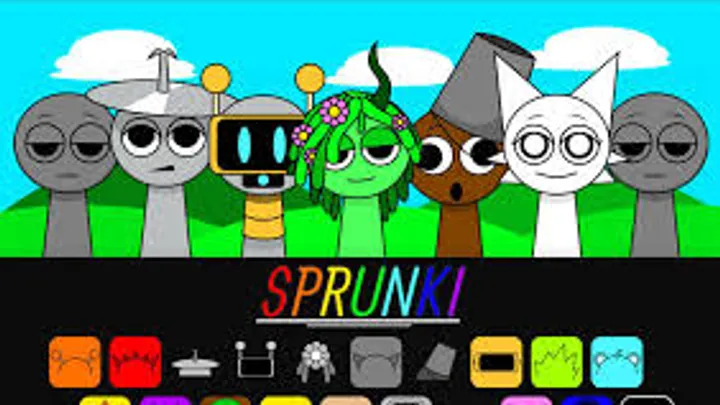
Sprunki is widely recognized as a fan-made music-mixing game inspired by rhythm sandbox mechanics, where players drag and drop characters to generate layered beats, melodies, and vocals. Developed as a community-driven experience rather than a traditional commercial product, Sprunki has quickly gained attention due to its unique style, experimental phases, and occasional horror-themed variations. While the game’s simplicity and accessibility are its biggest strengths, they also introduce one of its most significant issues: a lack of structured guidance that can lead to confusion and reduced engagement over time.
This article explores a specific and critical issue in Sprunki’s gameplay design — the imbalance between creative freedom and player direction — and how it impacts user experience, retention, and overall game value.
1. Understanding Sprunki’s Core Gameplay System
At its foundation, Sprunki operates as a music sandbox game where each character represents a unique sound element. Players drag characters onto the stage to create loops, combining beats, bass, melodies, and vocal effects into a cohesive track. There are no levels, missions, or win conditions — the goal is purely creative expression.
The game includes multiple “phases,” each offering different sound styles and visual themes. Some phases introduce darker or horror-inspired aesthetics, which add variety but do not significantly change the gameplay mechanics.
Basic gameplay elements include:
- Drag-and-drop character system
- Loop-based music layering
- Sound category diversity (beat, melody, vocal)
- Phase-based variations
While this simplicity makes the game easy to start, it also lays the groundwork for deeper issues.
2. The Illusion of Simplicity
At first glance, Sprunki appears extremely beginner-friendly. The interface is clean, and players can instantly create sound by placing characters. However, this simplicity is somewhat deceptive. New players often struggle to understand how to create a “good” track beyond random combinations.
Because the game lacks tutorials or structured onboarding, players are left to experiment blindly. This can be exciting initially, but it quickly becomes frustrating when results feel inconsistent or chaotic.
Key problems with simplicity:
- No clear progression system
- Lack of guidance on sound synergy
- Unclear objectives
3. Lack of Structured Progression
Unlike traditional games, Sprunki does not provide a sense of progression. There are no levels to complete, achievements to unlock, or milestones to reach. This absence can make the experience feel directionless after the initial novelty wears off.
Players who are not naturally inclined toward music creation may struggle to find motivation to continue playing. Without goals, the gameplay loop becomes repetitive.
Impact on players:
- Reduced long-term engagement
- Difficulty measuring improvement
- Lower replay value
4. Creative Freedom vs. Creative Overload
One of Sprunki’s biggest selling points is its complete creative freedom. However, too much freedom without constraints can overwhelm players. When given unlimited choices without guidance, players may feel unsure about what to do next.
This phenomenon, often referred to as “creative paralysis,” is particularly common among beginners who lack experience in music composition.
Signs of creative overload:
- Random placement of characters without intention
- Frequent restarting of tracks
- Frustration due to lack of satisfying output
5. Inconsistent Audio Feedback
Another issue lies in how the game communicates audio feedback. While each character produces a distinct sound, the interaction between different sounds is not always intuitive. Some combinations work harmoniously, while others clash without explanation.
This inconsistency makes it difficult for players to learn from their mistakes. Without clear feedback, improvement becomes a matter of trial and error rather than skill development.
Audio-related challenges:
- No visual indicators for harmony
- Lack of tempo or key guidance
- Difficulty predicting outcomes
6. Limited Gameplay Evolution Across Phases
Although Sprunki includes multiple phases, these variations primarily affect visual style and sound packs rather than gameplay mechanics. As a result, players may feel that each phase offers only superficial changes.
This lack of mechanical evolution reduces the excitement of discovering new content, as the core interaction remains unchanged.
Phase limitations:
- No new mechanics introduced
- Repetitive interaction model
- Visual changes outweigh gameplay changes
7. The Role of Horror Elements
Some versions of Sprunki incorporate horror-themed visuals and sound effects. While these elements add uniqueness and attract attention, they do not fundamentally enhance gameplay.
In some cases, the horror aspect may even distract from the music creation process, shifting focus away from the core mechanic.
Horror element drawbacks:
- Distraction from gameplay purpose
- Inconsistent tone across phases
- Limited impact on mechanics
8. Absence of Skill-Based Mastery System
Sprunki does not provide a clear pathway for players to develop or demonstrate mastery. Unlike rhythm games that reward timing and precision, Sprunki lacks measurable skill indicators.
This absence makes it difficult for players to feel a sense of accomplishment or growth.
Missing features:
- Score system
- Performance ratings
- Skill progression tracking
9. Community Dependence for Depth
Much of Sprunki’s depth comes from its community rather than the game itself. Players rely on shared mixes, tutorials, and external content to improve their experience.
While community involvement is valuable, it also highlights the game’s lack of built-in depth.
Community contributions include:
- Custom phases
- Shared music tracks
- Unofficial guides
10. Potential Solutions to Improve Gameplay Balance
To address the imbalance between freedom and structure, several improvements could be implemented. These changes would enhance accessibility without sacrificing creativity.
Suggested improvements:
- Interactive tutorials for beginners
- Optional objectives or challenges
- Visual indicators for sound compatibility
- Progression-based unlock system
By introducing these elements, Sprunki could maintain its creative identity while offering a more engaging and rewarding experience.
Conclusion
Sprunki stands out as a creative and accessible music sandbox game with a unique visual identity and flexible gameplay system. However, its greatest strength — creative freedom — also becomes its most significant weakness when not supported by structure. The lack of guidance, progression, and feedback can lead to confusion and reduced player retention.
Balancing freedom with direction is essential for improving the overall experience. With the right enhancements, Sprunki has the potential to evolve from a casual creative tool into a more engaging and satisfying game.