
Marvel’s Spider-Man 2 is widely praised for its fluid traversal, cinematic storytelling, and dual-protagonist structure. However, beneath its polished surface lies a deeply interesting and often overlooked design issue: the symbiote gameplay system, while visually spectacular and narratively compelling, subtly undermines player agency and disrupts the balance between freedom and control. This article explores that issue in depth, tracing how the symbiote mechanics evolve throughout the game and how they affect player experience, pacing, and emotional engagement.
1. The Early Promise of Dual Spider-Men
At the beginning of Spider-Man 2, players are introduced to a refined version of the gameplay seen in previous titles. Both Peter Parker and Miles Morales have distinct abilities, and the game emphasizes freedom of choice. You can switch between characters, explore New York seamlessly, and approach combat encounters in multiple ways.
This early phase establishes a strong sense of player control. Miles leans into bio-electric venom powers and stealth, while Peter focuses on gadgets and mechanical arms. The contrast feels intentional and balanced, giving players the impression that the game will build on this duality throughout its runtime.
A Balanced Power Structure
Each character fills a gameplay niche, and the player decides how to engage with encounters.
Key strengths in early gameplay
- Freedom to choose between Peter and Miles
- Distinct combat styles
- Flexible mission structure
However, this balance is short-lived once the symbiote enters the picture.
 2. The Arrival of the Symbiote Suit
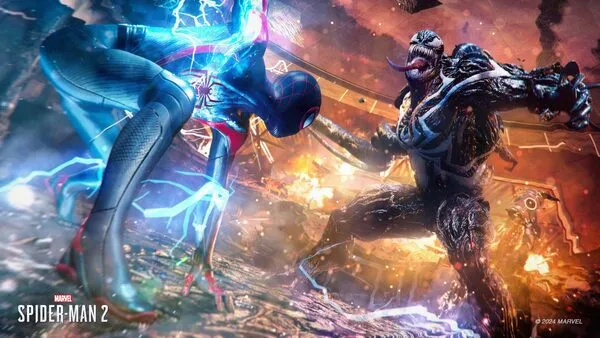
When Peter acquires the symbiote suit, the tone of the game shifts dramatically. The suit introduces new abilities that are faster, stronger, and more aggressive than anything previously available.
At first, this feels exhilarating. The animations are more brutal, attacks have greater impact, and combat becomes faster-paced. Players feel empowered, as if they’ve unlocked a new tier of Spider-Man’s potential.
The Illusion of Choice
Despite the apparent increase in options, the symbiote abilities quickly overshadow Peter’s original toolkit.
Immediate effects on gameplay
- Symbiote attacks deal higher damage
- Crowd control becomes easier
- Traditional gadgets feel less useful
This creates an illusion of choice, where players technically have multiple options but are incentivized to rely on the symbiote.
3. Power Creep and Combat Imbalance
As the game progresses, the symbiote’s strength introduces a classic game design problem: power creep. The more players rely on these abilities, the less viable other mechanics become.
Combat encounters begin to feel skewed. Enemies are designed to challenge symbiote powers, which indirectly punishes players who try to stick with older playstyles.
A Shift in Player Behavior
Players naturally gravitate toward the most efficient strategies, and the symbiote becomes that strategy.
Observable changes
- Reduced use of gadgets
- Less experimentation in combat
- Increased reliance on brute force
This undermines the diversity that made earlier gameplay so engaging.
4. Narrative Justification vs Gameplay Consequence
From a storytelling perspective, the symbiote represents corruption and loss of control. Peter becomes more aggressive, mirroring the player’s increased power.
While this alignment between narrative and gameplay is impressive, it comes at a cost.
When Story Overrides Systems
The game prioritizes narrative immersion over gameplay balance.
Conflicting design goals
- Story demands overwhelming power
- Gameplay needs balanced systems
- Player freedom becomes secondary
The result is a system that feels intentional but restrictive.
5. The Loss of Player Agency
One of the most subtle but impactful issues is how the symbiote reduces player agency. Players are nudged—sometimes forced—into using specific abilities.
This is especially noticeable in story missions where symbiote powers are required.
Forced Engagement
Instead of choosing how to play, players must adapt to the symbiote.
Examples of reduced agency
- Mandatory symbiote combat sequences
- Limited effectiveness of non-symbiote tools
- Scripted gameplay moments
This shift can feel jarring, especially for players who prefer Miles or a stealth-based approach.
6. Miles Morales as a Secondary Experience
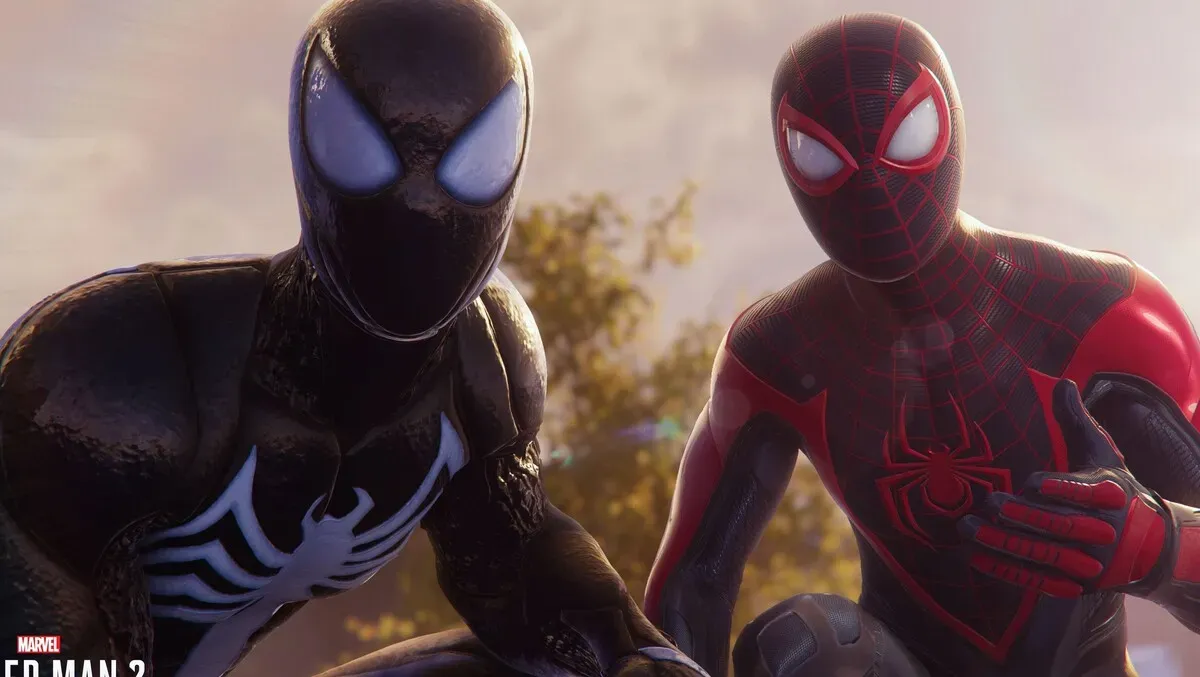
As Peter’s symbiote arc intensifies, Miles begins to feel like a secondary character in gameplay terms.
Although Miles retains his unique abilities, they don’t scale in the same way as Peter’s symbiote powers.
A Tale of Two Power Levels
The disparity becomes more noticeable in late-game missions.
Key differences
- Miles relies on precision and timing
- Peter dominates with raw power
- Enemy design favors symbiote encounters
This imbalance affects how players perceive both characters.
 7. Pacing Problems in the Mid-Game
The introduction of the symbiote also disrupts the game’s pacing. Early gameplay encourages exploration and experimentation, but mid-game missions become more linear and combat-heavy.
The shift feels abrupt, as if the game narrows its focus too quickly.
From Sandbox to Setpiece
The open-world freedom takes a backseat to scripted sequences.
Pacing issues
- Reduced side activity engagement
- Repetitive combat encounters
- Less emphasis on traversal creativity
This can lead to fatigue, even as the story intensifies.
8. Visual Spectacle vs Mechanical Depth
There’s no denying that the symbiote abilities look incredible. The animations, effects, and sound design are top-tier.
However, this visual spectacle often masks a lack of mechanical depth.
Style Over Substance
The abilities feel powerful, but not necessarily nuanced.
Limitations
- Limited strategic variation
- Repetitive attack patterns
- Over-reliance on visual feedback
Players may feel impressed, but not challenged in meaningful ways.
9. The Late-Game Correction
Interestingly, the game attempts to address these issues in its final act. As the symbiote arc reaches its climax, players regain some sense of balance.
Peter’s powers are recalibrated, and Miles becomes more central again.
A Return to Balance
The game reintroduces elements of choice and variety.
Positive changes
- More balanced combat encounters
- Increased relevance of both characters
- Greater emphasis on teamwork
While this correction is welcome, it comes late in the experience.
10. Lessons for Future Spider-Man Games
Spider-Man 2 offers valuable lessons for future game design. The symbiote system is a bold experiment, but it highlights the risks of prioritizing power fantasy over player agency.
Developers can learn from these challenges to create more balanced and flexible systems.
Key Takeaways
Future titles could refine the formula by maintaining balance throughout the game.
Recommendations
- Ensure all abilities remain viable
- Avoid forced gameplay mechanics
- Balance narrative and player freedom
By addressing these issues, future Spider-Man games can deliver both spectacle and depth.
Conclusion
Marvel’s Spider-Man 2 succeeds in delivering an unforgettable narrative and exhilarating gameplay, but its symbiote system introduces a complex design problem. By overpowering the player and limiting choice, it disrupts the balance that defines great open-world experiences. While the game ultimately recovers, the journey reveals how easily player agency can be compromised in pursuit of cinematic storytelling.