


































Introduction
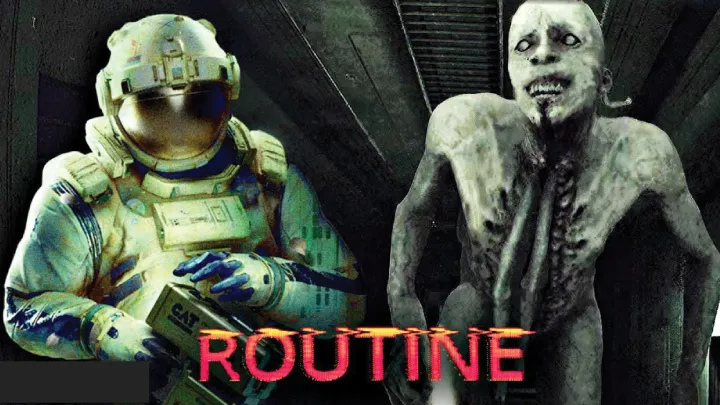
Routine is a first-person sci-fi survival horror game developed by Lunar Software and published by Raw Fury. Set on an abandoned lunar base inspired by retro 1980s technology, the game focuses on exploration, survival, and uncovering a mysterious incident.
Players take on the role of an unnamed protagonist navigating a deserted moon facility filled with hostile threats, primarily robotic enemies. Instead of traditional combat-heavy gameplay, Routine emphasizes tension, observation, and careful exploration.
However, despite its strong atmosphere and immersive design, the game presents a critical issue: its heavy focus on immersion often limits player control and clarity, creating frustration instead of engagement. This article explores how this design choice impacts gameplay.
1. Core Gameplay Overview
Routine is built around first-person survival horror mechanics. Players explore a lunar base, gather clues, and survive encounters with hostile entities.
Unlike action-oriented horror games, Routine encourages players to move slowly, observe environments, and avoid unnecessary risks.
Core gameplay features:
- First-person exploration
- Survival against robotic enemies
- Environmental storytelling
- Use of the C.A.T. (Cosmonaut Assistance Tool)
The simplicity of this design contributes to both its strengths and weaknesses.
2. The Role of Exploration in Gameplay
Exploration is central to Routine. Players must navigate different sectors of the moon base, including living quarters, transit systems, and abandoned facilities.
There are no traditional markers or guidance systems, meaning players must rely entirely on observation.
Exploration characteristics:
- No waypoint system
- Hidden paths and secrets
- Environmental clues
While immersive, this design can also lead to confusion.
3. Lack of Direction and Player Guidance
One of the most noticeable issues in Routine is the absence of clear direction. The game intentionally avoids giving players explicit objectives or markers.
While this enhances realism, it often leaves players unsure of what to do next.
Problems caused:
- Players get lost easily
- Progression feels unclear
- Increased trial-and-error gameplay
This design choice may not suit all players, especially those unfamiliar with exploration-heavy games.
4. Minimal UI: Immersion vs Usability
Routine uses a minimal user interface to enhance immersion. Information is presented through in-game tools rather than traditional HUD elements.
While this design strengthens realism, it reduces usability.
UI limitations:
- Lack of clear status indicators
- No map or navigation tools
- Important information can be missed
This creates a barrier between the player and the game’s systems.
5. The C.A.T. Tool: Multi-Function but Limited Feedback
The Cosmonaut Assistance Tool (C.A.T.) is the player’s primary device. It is used for interacting with the environment, accessing systems, and defending against enemies.
While versatile, the tool lacks clear feedback on how to use it effectively.
C.A.T. issues:
- Unclear functionality in certain situations
- Limited combat effectiveness
- Reliance on battery management
Players often struggle to understand its full potential.
6. Combat System: Avoidance Over Action
Routine does not focus on combat. Instead, players are encouraged to run, hide, or temporarily disable enemies.
This design aligns with survival horror principles but can feel restrictive.
Combat limitations:
- No traditional weapons
- Limited defensive options
- Repetitive enemy encounters
The lack of variety reduces excitement over time.
7. Procedural Elements and Unpredictability
Some aspects of the environment and threats are partially procedurally generated.
This adds unpredictability but also inconsistency.
Effects of procedural design:
- Unpredictable enemy placement
- Variable exploration experience
- Inconsistent difficulty
While replayability improves, clarity suffers.
8. Pacing Issues in Slow-Burn Horror
Routine is designed as a slow-burn horror experience. Tension builds gradually through atmosphere rather than action.
However, this pacing can feel too slow for some players.
Pacing challenges:
- Long periods without interaction
- Slow progression
- Reduced excitement
Players expecting constant action may lose interest.
9. Environmental Storytelling: Strength but Also Barrier
The game relies heavily on environmental storytelling. Players must piece together the narrative through notes, recordings, and visual clues.
This approach enhances immersion but requires effort.
Storytelling limitations:
- Easy to miss key information
- No direct narrative guidance
- Requires high attention to detail
Some players may feel disconnected from the story.
10. Balancing Immersion and Accessibility
The core issue in Routine lies in balancing immersion with accessibility. The game prioritizes realism and atmosphere, sometimes at the cost of player experience.
Potential improvements:
- Optional guidance system
- Improved UI feedback
- Better explanation of mechanics
- Adjustable difficulty and pacing
These changes could make the game more accessible without sacrificing its identity.
Conclusion
Routine stands out as a unique sci-fi horror experience with strong atmospheric design and immersive gameplay. Developed by Lunar Software and published by Raw Fury, it successfully delivers tension through exploration and minimalism.
However, its heavy focus on immersion creates significant challenges. The lack of guidance, minimal UI, and unclear mechanics can lead to confusion and frustration. While these design choices enhance realism, they also limit accessibility and player satisfaction.
Ultimately, Routine is a game that excels in atmosphere but struggles with usability. Balancing these elements will be key to improving the overall player experience.