





Megabonk is often dismissed at first glance as a comedic ragdoll party game where players bounce, fly, and slam into each other with zero predictability. But the deeper truth is far more interesting: behind every explosive collision lies a carefully engineered momentum system that governs how bodies move, bounce, and interact with the environment. This article focuses entirely on that one hidden issue—the momentum system—and how it shapes nearly every aspect of Megabonk’s gameplay. Through ten structured sections, we examine how momentum affects skill expression, level architecture, combat depth, psychological loops, and long-term mastery. What seems like chaos is, in reality, a complex ecosystem waiting to be understood.
1.The Core Philosophy Behind Megabonk’s Momentum
Megabonk was built around a single design belief: movement should always matter more than button inputs. Instead of precise combos or rigid platforming, players interact with a world where energy conservation, collision angles, and force transfer decide outcomes. Every jump and impact becomes a moment of potential transformation. Small changes in direction or speed result in wildly different trajectories.
This creates a distinct gameplay identity. Instead of learning long move lists, players must learn how the world reacts to them. Mastery comes from reading angles, anticipating bounces, and treating every surface as part of a physics puzzle. The system feels wild because small input differences produce big consequences, but those consequences follow consistent rules. Once players internalize those rules, Megabonk starts feeling less like chaos and more like a playground of controlled momentum.
2.Player Agency Versus the Will of Physics
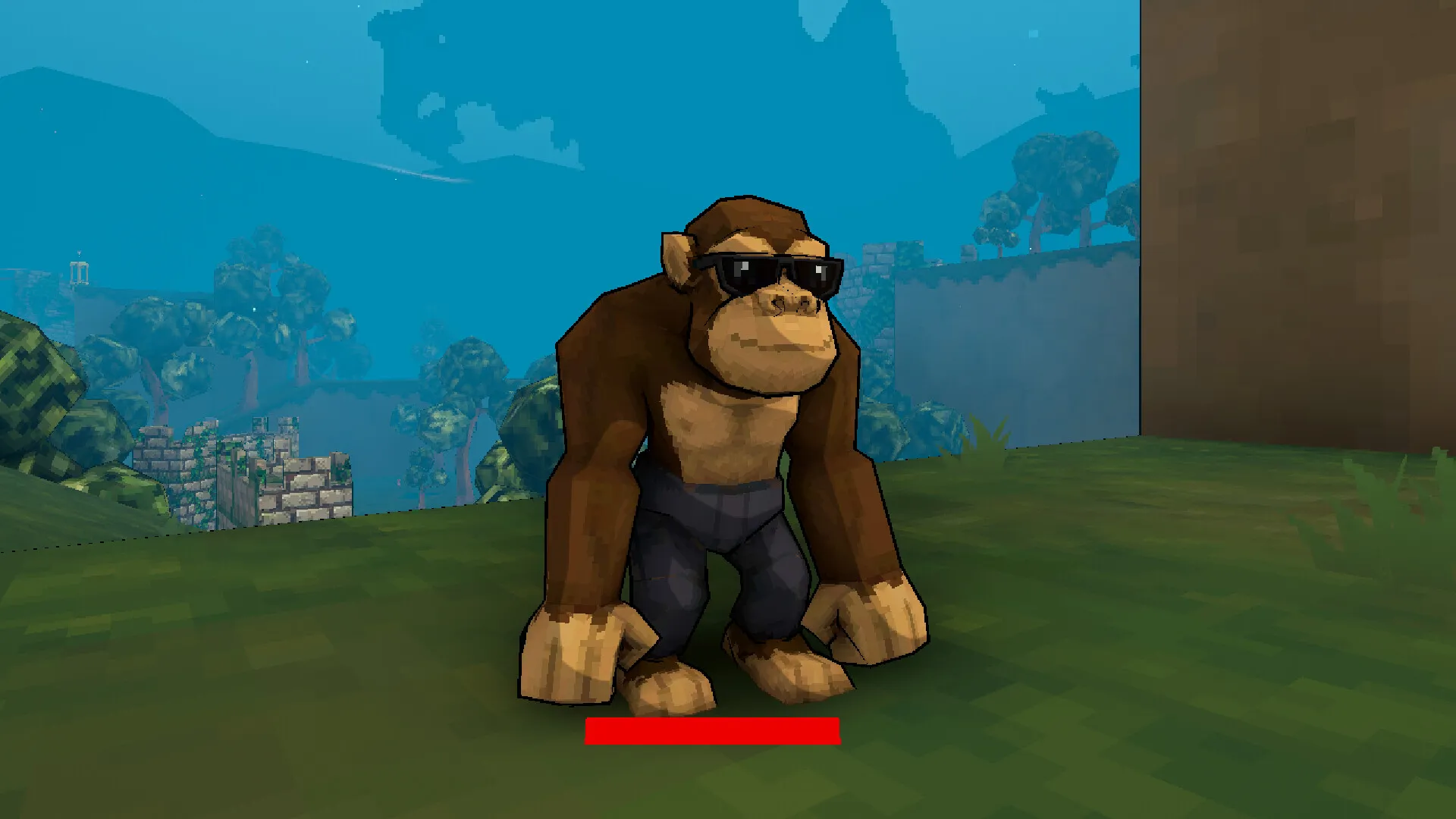
Megabonk forces players to confront a unique tension: you can influence physics, but you cannot fully control it. Movement inputs provide direction, but physics ultimately decides how momentum propagates. This friction is intentional. The designers removed micro-steering and perfect mid-air correction to prevent players from overriding the physics. Every leap is a commitment.
This creates a fascinating playstyle. Good players do not spam corrections during bounce chains—they nudge, they adjust, and then they surrender control at the right moment. Poor players fight the physics and worsen their results. The skill curve emerges naturally from this relationship. Mastery is not about dominating the engine but cooperating with it. You learn when to guide and when to yield, a rhythm that becomes intuitive through trial and error.
3.Reading Collisions as a Language
Every surface in Megabonk communicates something. Hard walls rebound players at sharp angles, soft pads absorb energy, elastic surfaces multiply vertical momentum, and sloped terrain redirects movement. Over time, players learn to interpret these reactions like a language. Instead of guessing, they begin predicting outcomes based on material type, angle of approach, and previous collisions.
This language grows more complicated in advanced stages where mixed materials appear in the same arena. A launch might start on a smooth ramp, bounce off a metal plate, ricochet off an enemy’s body, and end with a spring pad. What seems impossible at first becomes readable with practice. Collision literacy becomes a core player skill, and high-level players treat the entire map like a momentum chessboard where every tile has a purpose.
4.Combat Shaped by Physics, Not Damage Numbers
Megabonk’s combat is unconventional because damage rarely comes from weapon strength—momentum does the work. A punch or shove that generates enough kinetic force can be more lethal than any stat-based upgrade. Enemies themselves become physical tools. A heavy enemy can be used to smash through obstacles. A lightweight enemy might become a projectile that triggers traps or buttons.
Weapons also deviate from traditional design. Instead of focusing on raw power, they modify properties like mass, friction, or spin rate. A heavy hammer increases your total momentum weight, letting you plow through enemies. A lightweight baton reduces mass, giving you more agility. Combat becomes a physics negotiation instead of a DPS race. The best players engineer confrontations, creating chain reactions and environmental combos that look accidental but are meticulously planned.

5.Level Design as Momentum Architecture
Every arena in Megabonk is designed as a momentum amplifier. Designers sculpt channels that accelerate players, funnels that redirect them, slopes that guide arcs, and vertical launch points that create airborne sequences. Momentum zones with altered gravity or friction add variation. Instead of simply placing obstacles, the level designers build physics ecosystems.
This approach encourages discovery. Many shortcuts and high-skill routes are deliberately hidden behind momentum mastery. Speedrunners exploit slopes, curves, and bounce pads to create sequences that casual players never notice. A well-designed Megabonk map doesn’t just contain obstacles—it contains possibilities. Players who understand the architecture can turn the entire environment into a tool for movement, attack, or survival.
6.Weight, Mass, and Their Strategic Implications
One of Megabonk’s most overlooked mechanics is mass variation. The player’s effective weight changes depending on equipment, character choice, and temporary buffs. Heavy builds maintain speed better during collisions, allowing for powerful destructive runs. Light builds gain speed quickly but also ricochet more unpredictably.
This creates a meaningful strategic layer:
• Heavy builds excel at bulldozing and crowd control.
• Light builds specialize in agility and aerial maneuvers.
• Medium builds balance precision and bounce potential.
Surfaces also affect mass. Low-friction tile layouts reduce control but increase chain velocity. Sticky surfaces create emergency braking zones. Understanding how mass interacts with materials is essential for planning both offensive and defensive maneuvers.
7.The Emotional Psychology of Controlled Chaos
Megabonk intentionally keeps players on an emotional rollercoaster. The unpredictability creates frustration, humor, and exhilaration in equal measure. The designers use this psychological loop to keep players invested. Failures happen often, but they are usually comedic, preventing tilt or bitterness. Successes, on the other hand, are spectacular—when a planned bounce chain works, the satisfaction is enormous.
This loop is powerful because every moment feels like a setup for something bigger. Even a failed bounce can accidentally lead to a lucky victory. The constant sense of “I can do better next time” drives engagement. The game weaponizes chaos as emotional fuel, making every session memorable and story-worthy.
8.Community Creativity Born From Emergence
Megabonk’s physics system invites creativity, and the community has embraced this completely. Players design their own challenge runs, bounce puzzles, and momentum trick shots. Entire subgenres of content—launch challenges, ricochet trick compilations, cooperative bounce courses—have emerged organically.
The developers support this culture by avoiding unnecessary patches that remove high-skill physics exploits. Instead, they celebrate emergent gameplay. This partnership between players and designers keeps the community vibrant. Tutorials, experiments, speedrun discoveries, and user-generated maps continually expand the game’s depth beyond its original content.
9.Mastery Through Predictable Unpredictability
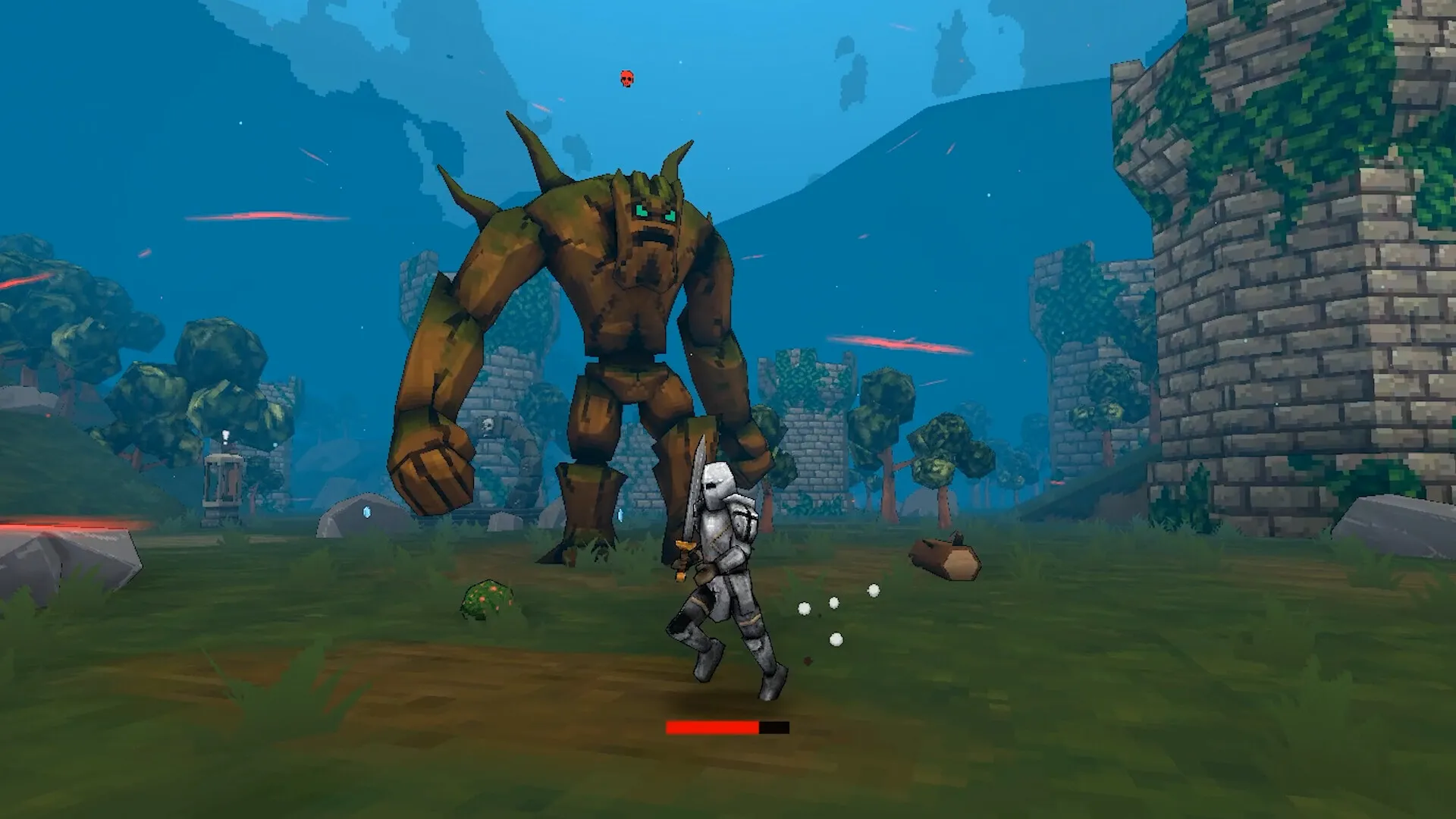
The secret to Megabonk’s longevity is its paradoxical mastery curve. At first, the game seems impossible to control. But as players develop intuition for angles, surface types, and momentum transfer, the chaos becomes manageable. Experts perform sequences that look like magic—multi-bounce launches, angle-perfect ricochets, and enemy-assisted maneuvers that appear accidental but are fully intentional.
Mastery transforms Megabonk from a random party game into a physics-engineering playground. Players graduate from reacting to designing. They learn to aim with walls, bounce off enemies, and chain surfaces into intended outcomes. The system’s predictability rewards persistence, making long-term play deeply satisfying.
10.The Future of Momentum-Based Design
Because Megabonk’s core is a robust physics engine, its future potential is enormous. The game could expand with new material types, environmental modifiers, or cooperative physics challenges requiring players to coordinate momentum. Advanced arenas with magnetism, slow-motion zones, or destructible surfaces could push the engine in exciting new directions.
Beyond level additions, the developers can continue refining the momentum ecosystem by introducing more tools for players to manipulate energy. Objects that store, reverse, or amplify force could create unprecedented strategies. Megabonk’s future is essentially unlimited because its foundation is an emergent system that thrives on complexity and creativity.
Megabonk may appear to be a silly ragdoll game full of flailing characters and chaotic collisions, but at its heart lies a sophisticated momentum system that rewards understanding, precision, and creativity. The physics engine transforms movement into strategy, surfaces into puzzles, and enemies into tools. Mastering this hidden layer turns chaos into intention and randomness into skill. Megabonk is more than slapstick entertainment—it is a momentum sandbox that grows deeper the more you explore it.