The Haunting Weight of Eclipsed Spirits in ELDEN RING: NIGHTREIGN
Among all expansions and evolutions of the Lands Between, ELDEN RING: NIGHTREIGN introduces one central mechanic that shapes the entire journey: the Eclipsed Spirits. More than a combat challenge or world-design layer, this system alters how players interpret morality, permanence, and consequence in a world already forged by ruin. Rather than remain a simple spiritual variant, Eclipsed Spirits transform the rules of death and persistence, and they dictate the emotional tone of the expansion’s storytelling. This article explores the depth of that mechanic—how it functions, how it changes moment-to-moment play, how it reshapes narrative identity, and what it reveals about the Lands Between.
1. The Emergence of the Eclipsed Spirits
The first appearance of Eclipsed Spirits is not announced with spectacle but with dread. Early encounters place them in half-collapsed villages or isolated ruins, their silhouettes warped by lunar corruption. The way they drift yet retain memory of their former selves introduces a design philosophy distinct from previous spectral forms: these spirits resist oblivion. They refuse to fade. The expansion frames this as a cosmic disturbance that has torn the divide between death and lingering consciousness.
From a thematic standpoint, their presence communicates that Nightreign’s world suffers from spiritual stagnation. No one passes on. No one lets go. This indefinite stasis fuels environmental storytelling, where locations show scenes of people desperately trying to hide from their own lingering echoes. The core idea is that the world cannot heal because the dead will not depart.
2. The Mechanic as a Moral Burden
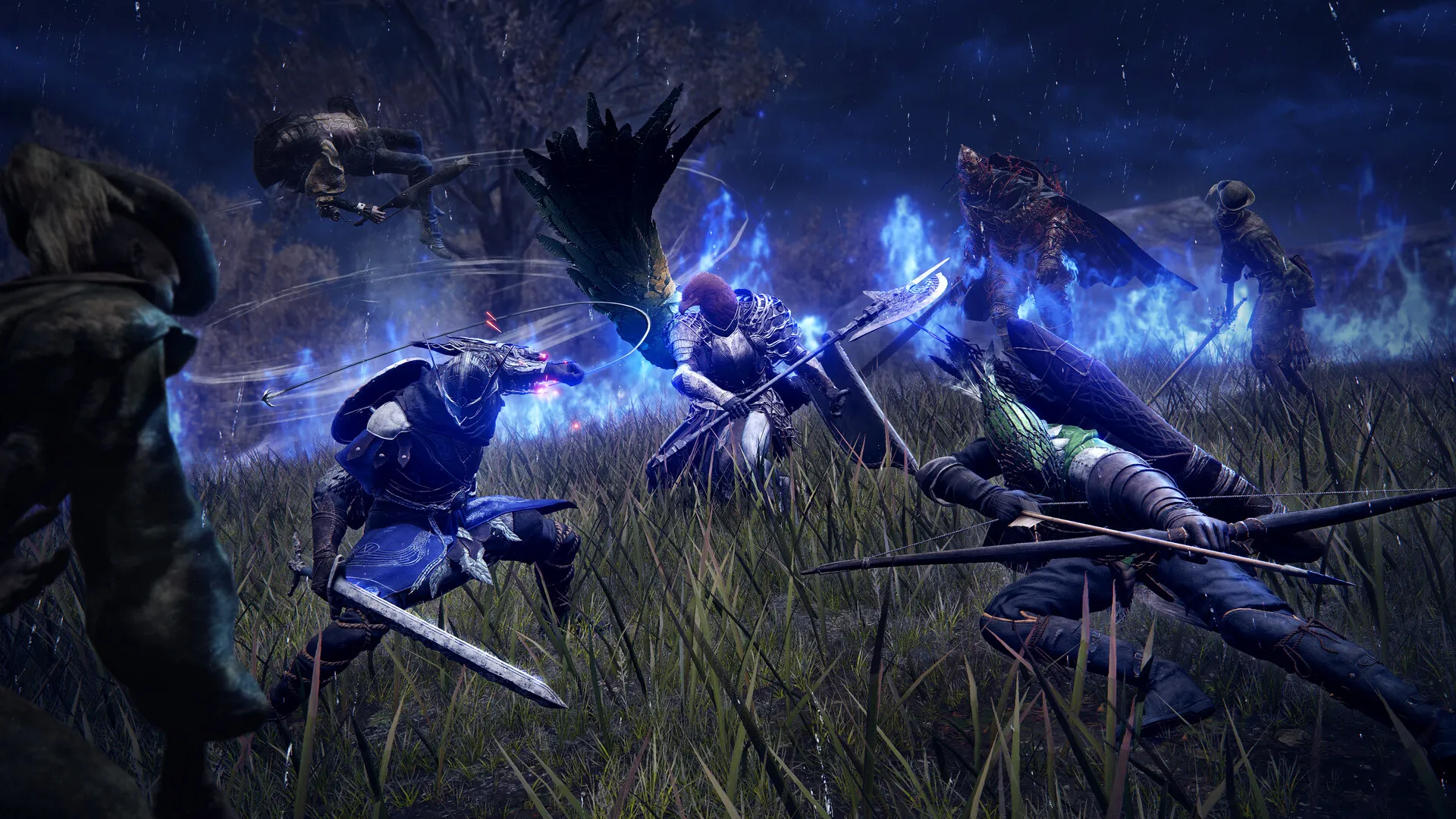
The primary innovation behind Eclipsed Spirits is that they are tethered to the player. When a player defeats an enemy for the first time in NIGHTREIGN regions, an imprinted version of that enemy has a chance to spawn later as an Eclipsed Spirit. These echoes track the player across zones, altering their behaviors based on how they died, what abilities they used, and even the conditions of their death. This forces players to confront the consequences of violence in a world normally built on depersonalized combat.
The mechanic adds a moral dilemma: the more aggressive or ruthless the player becomes, the stronger and more varied their echoes. This creates a feedback loop that punishes thoughtless violence while rewarding selective conflict. The world suddenly cares about how you kill, not just whom.
3. Environmental Evolution Around the Spirits
Nightreign’s level design shifts alongside this mechanic. Areas that were once predictable—from shadowed forests to lunar caverns—gain new patterns of threat. Eclipsed Spirits do not obey standard spawn rules; they appear where emotional resonance is strongest. This could be a bridge where the player killed a merchant thief or a cliffside where a boss was defeated and left to rot.
As a result, the environment becomes an archive of personal history. Paths become psychological spaces where every encounter carries meaning. This shifts exploration from linear discovery to emotionally weighted retrospection, making the player aware of the invisible trails they leave behind.
4. Narrative Purpose Behind Persistence
NIGHTREIGN uses the Spirits to explore the theme of unfinished business. Many of the echoes whisper fragmented memories—names, regrets, warnings—suggesting that they are not merely combat constructs but narrative vessels. Some fragments reveal new lore about the Night Queen and her failed attempt to restore balance to the cycle of death.
The Spirits therefore guide players toward hidden truths. Instead of standard quest markers, their whispered regrets act as clues. They may repeat a phrase that references a forgotten temple or scream a name that points to an unmarked grave. The mechanic becomes a narrative map, rewarding players who pay attention to their cries.
5. Psychological Influence on Player Decision-Making
The mechanic is designed to alter how players behave over time. The longer players progress, the more emotionally charged their decisions become because every action risks creating another echo. This shifts the psychological profile of gameplay from power-fantasy to self-awareness. Some players may avoid unnecessary conflict, knowing the consequences will return later in more dangerous form.
Moreover, when players revisit earlier zones, they may find themselves confronted by the echoes of choices made hours earlier—sometimes uncomfortably so. An enemy slain swiftly may return as a disoriented, pitiful spirit. An enemy slain brutally may return furious and relentless. This creates a nuanced behavioral spectrum where guilt becomes a unique form of challenge.
6. The Boss Encounters Amplified by Echo Mechanics
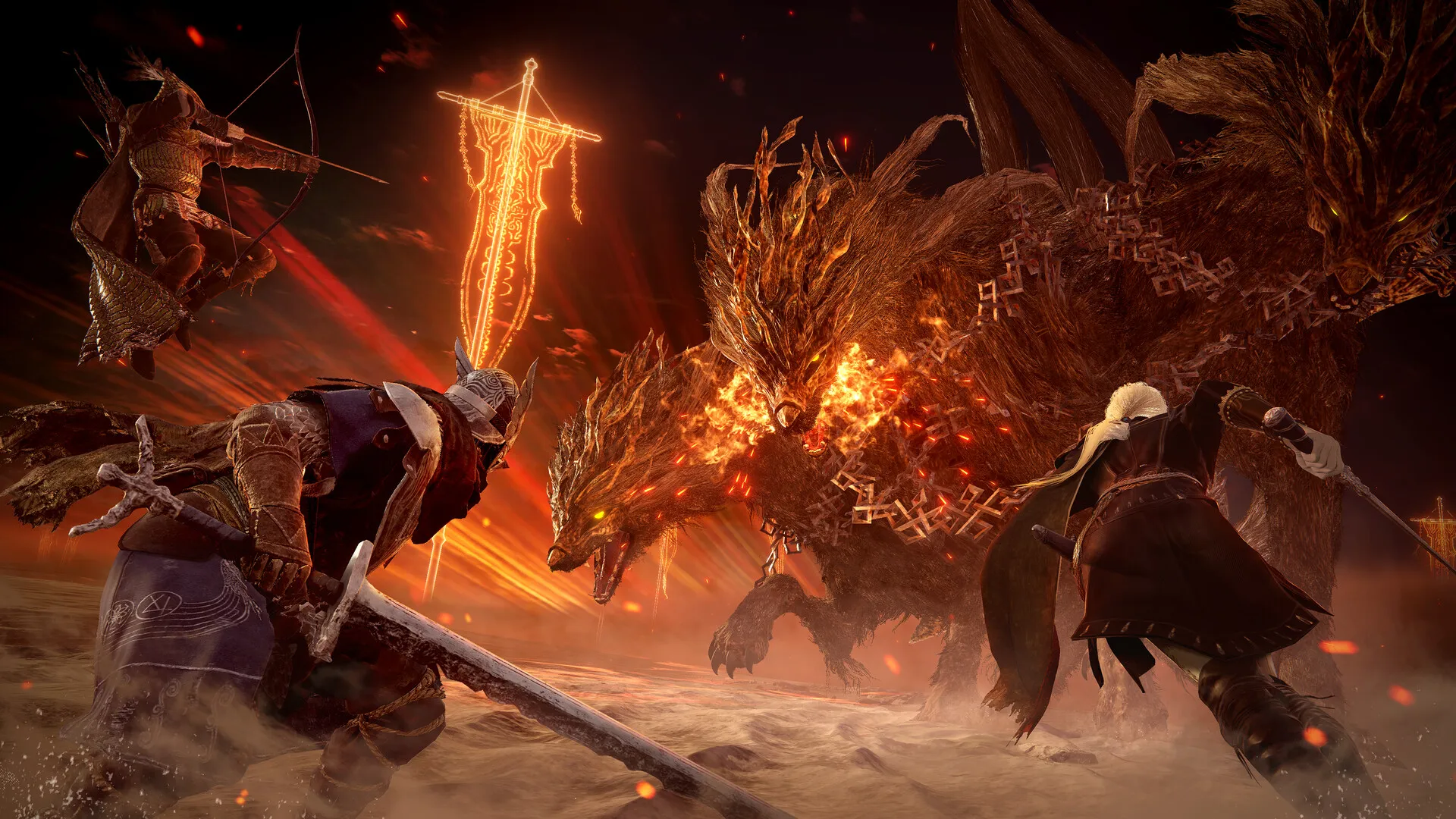
Boss fights adopt the Eclipsed mechanic in more subtle ways. Some bosses spawn an echo phase after defeat, years or centuries after their original demise. These echoes typically manifest in unexpected locations, challenging the player at emotionally charged moments rather than at statically designed arenas.
These echo bosses are often weaker physically but more dangerous psychologically. Their dialogue shifts, referencing the moment of their defeat, questioning why they were killed, or accusing the player of perpetuating the broken cycle. This reframes boss battles not merely as tests of skill but as evolving relationships shaped by memory and consequence.
7. The Role of the Night Queen in the Cycle
The lore centers heavily on the Night Queen, whose failed ritual created the Eclipse phenomenon. Her intention was to prevent the misuse of resurrection magic spreading through the Lands Between, but her ritual destabilized the boundary between soul and corpse. Instead of restoring balance, she trapped spirits in perpetual half-existence.
Exploring her temples reveals inscriptions about her philosophy: that true death is a mercy, and that life without finality becomes torment. These inscriptions contextualize the Spirits not as enemies but as victims of failed salvation. Understanding this reframes the expansion’s conflict as a tragedy rather than a war.
8. Player Identity Intertwined with the Mechanic
As players accumulate more echoes, NIGHTREIGN gradually reveals a deeper truth: Eclipsed Spirits reflect not only the world’s instability but also the Tarnished’s own fractured soul. The more echoes haunt the player, the more distorted the player’s own spectral reflection becomes. This eventually manifests in a major late-game sequence where the player confronts an Eclipsed version of themselves—an echo formed from cumulative actions across the journey.
This encounter is not a traditional fight. The player must navigate a shifting labyrinth built from memories and mechanics. The echo uses combinations of the player’s own favored tactics, exploiting their playstyle against them. It is one of the most psychologically intense sequences the series has delivered.
9. Resolution and the Final Choice
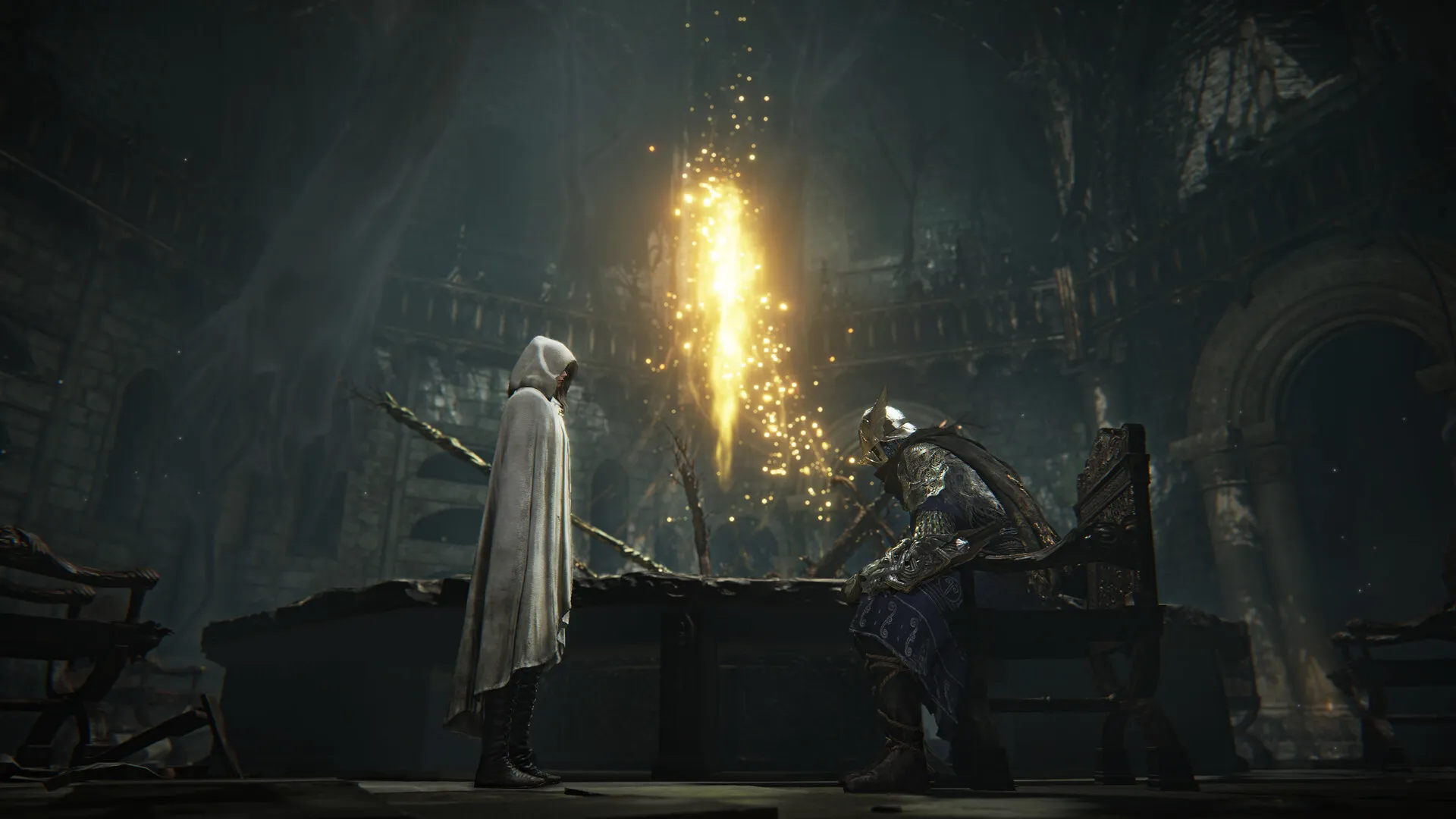
The climax of NIGHTREIGN revolves around a choice: complete the Night Queen’s ritual, restoring the natural cycle of death, or shatter it permanently to grant immortal awareness to all beings. Choosing the first option releases all Eclipsed Spirits from torment, including those that haunt the player. Choosing the second traps the world in a new era of luminous half-existence—beautiful, haunting, and eternal.
Each ending reflects the player’s emotional and behavioral journey. If the player created many echoes and embraced violence, freeing them becomes an act of redemption. If the player cultivated restraint, choosing eternal consciousness becomes a philosophical extension of their empathy. The expansion closes not with triumph but with introspection.
ELDEN RING: NIGHTREIGN elevates the conversation about consequence within open-world action RPGs. The Eclipsed Spirits mechanic transforms the player’s history into an active force that shapes environment, narrative, psychology, and identity. It challenges the idea of faceless enemies and meaningless repetition by making every kill matter, every decision echo, and every regret return. Through this mechanic, NIGHTREIGN becomes a meditation on death, memory, and accountability—an evolution of the genre that turns gameplay into philosophy.