Total War: WARHAMMER III — How to Master the Battlefield, the Campaign, and Every Faction
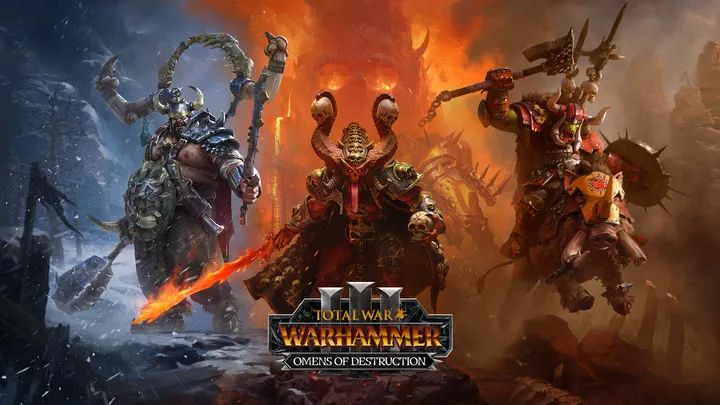
Total War: WARHAMMER III is one of the most complex and deep strategy games ever made, merging grand-strategy empire building with real-time battles featuring thousands of troops, legendary lords, and world-shaping magic. For new players and even experienced veterans of Total War or Warhammer Fantasy, the game can feel overwhelming at first. The campaign map demands long-term planning, faction knowledge, and economic management, while the battles require fast tactical decisions, positioning, formations, and understanding of unit roles. But once you understand the flow of the game — from your first turns to late-game domination — WARHAMMER III becomes an incredibly rewarding experience.
This extensive guide will teach you how to master Total War: WARHAMMER III step by step, from early-game survival to end-game warfare. The focus is practical, not general. Every section builds upon the previous one and provides actionable techniques, mindset changes, and long-form strategic insights that go far beyond surface-level tips.
Whether you're struggling with battles, faction economy, expansion strategies, or the sheer chaos of dealing with 200+ unit types across dozens of factions, this guide will walk you through the complete mastery path.
Let’s begin.
1. Understanding the First 20 Turns: Building a Foundation for Victory
Your first 20 turns shape your entire campaign. Players often underestimate how heavily these early decisions influence economy, positioning, diplomacy, and long-term power. The first phase of a WARHAMMER III campaign isn’t about conquering everything in sight — it’s about stabilizing.
Early Priorities:
• Secure a provincial capital
• Identify your first natural enemies
• Build infrastructure that supports your faction strengths
• Keep armies cheap and efficient
Most factions begin with low income and a limited unit roster. Overspending early weakens you later when enemy armies begin fielding elite troops. Start by eliminating local rebel or minor faction threats and occupy your starter province fully. Completing a province unlocks commandments, which significantly boost growth, income, corruption management, or public order depending on your faction.
Economic buildings come first unless your faction economy thrives on aggression (Khorne, Greenskins). Defensive buildings are situational; generally avoid them unless your start position is surrounded. Focus on growth and income so that by turn 20–25, you’re economically strong enough to field a second army. Two armies mark the true beginning of strategic momentum.
2. Building and Managing Your Economy Efficiently
A strong economy is the hidden engine of every successful WARHAMMER III campaign. Players who constantly struggle mid-game often overspend early or fail to invest in income structures. Each faction has different types of economic buildings, but the principles remain consistent.
Economy Fundamentals:
• Growth increases building capacity
• High-tier settlements unlock elite units
• Trade is valuable for non-chaos factions
• Corruption affects public order and income
Focus your early game economy on provinces with natural resource deposits — these become high-value economic centers later. Save your gold for essential upgrades. Do not build every income building in every settlement; instead, concentrate power in 1–2 major provinces. Spend early money upgrading your capital because high-tier units and advanced infrastructure require expensive upgrades.
Army upkeep is your largest expense. Your goal is always to maintain the strongest possible army for the lowest possible cost. Heroes with upkeep-reducing skills, certain tech trees, and legendary lord traits can reduce your economy burden significantly.
Later in the campaign, consider specialized provinces:
• Recruitment province (military buildings)
• Trade/income province
• Magic/corruption management province
• Frontier defense province
This specialization allows you to scale your economy efficiently into late-game dominance.
3. Mastering Diplomacy: Turning Allies into Strategic Tools
Diplomacy in WARHAMMER III is more meaningful than in previous Total War games. Alliances, defensive pacts, and vassals can determine the flow of entire wars. The AI is more aggressive and more reactive to threats, which means you must use diplomacy deliberately.
Key Diplomacy Concepts:
• Don’t fight too many wars at once
• Prioritize enemies who border you
• Defend your flanks with alliances
• Use outposts to strengthen your armies
Diplomacy is especially crucial for vulnerable factions like Kislev or Cathay, who face multiple invasion directions. A strong ally to anchor one direction of your borders reduces your defensive burden dramatically. Outposts allow you to recruit units from your allies, opening up unique synergies. Imagine a Cathay army with Dwarven artillery or an Empire army reinforced by Kislev’s cavalry archers.
Vassals are also powerful; they provide income, serve as buffer states, and can absorb enemy aggression. Certain factions like Chaos or Ogres can create vassals easily — use them as shields while expanding elsewhere.
When possible, avoid declaring war on factions with strong allies. A single war can escalate into a multi-front disaster if managed poorly.

4. Army Composition and Unit Roles: Building the Perfect Army
Understanding unit roles is essential for winning battles consistently. WARHAMMER III contains a huge variety of units, and mastery means knowing not only what to recruit but also how to use each type effectively.
Core Unit Categories:
• Infantry (anvil units, frontline stability)
• Cavalry (shock damage, flanking)
• Monsters & Beasts (fear/terror, disruption)
• Artillery (long-range pressure)
• Missile Troops (sustained ranged damage)
• Spellcasters (battlefield control)
Infantry exists to hold the line — not to deal massive damage. Monsters break formations, artillery shapes enemy movement, and cavalry destroys weakened or isolated targets. Every army needs a balance, though the exact composition depends on faction strengths.
Examples:
• Kislev: Hybrid infantry + cavalry archers
• Khorne: Heavy infantry + monstrous units
• Cathay: Harmony-based infantry + artillery
• Skaven: Artillery + expendable infantry + overwhelming numbers
• Vampire Counts: Infantry tar pits + monsters + magic
A general rule:
Frontline = 40%
Missiles/Artillery = 30%
Cavalry/Monsters = 20%
Lords/Heroes = 10%
Use heroes to buff troops, provide magic support, or assassinate enemy characters. Never send them alone into full units unless they’re built for dueling.
5. Battlefield Control: Formations, Positioning, and Micro
Mastering formations and positioning wins many battles even before the fighting starts. Good players do not simply charge forward — they shape the battlefield by forcing the enemy into predictable patterns.
Essential Concepts:
• High ground advantage increases missile effectiveness
• Tight formations resist cavalry
• Spread formations reduce artillery damage
• Anchoring flanks prevents encirclement
Formations vary depending on your faction, but common strategies include holding infantry in the center, placing artillery behind, positioning missile infantry on the wings, and keeping cavalry hidden for flanking.
Micro-management fundamentals:
• Always flank with cavalry
• Rotate units so exhausted troops retreat
• Use pause or slow-motion if needed
• Control monsters manually — they wander frequently
Players who learn to cycle-charge cavalry, time spells properly, and maintain tight formations improve dramatically in battle outcomes.
6. Magic Mastery: How to Use Spells for Maximum Impact
Magic in WARHAMMER III is more influential than ever. A single well-timed spell can change the course of a battle. Each lore of magic has unique strengths, whether it’s direct damage, debuffs, buffs, or vortex spells.
Types of Magic Usage:
• Overcasting for maximum effect
• Buffs to strengthen your frontline
• Debuffs to weaken dangerous enemies
• Vortex spells to wipe out infantry
Players often misuse magic by casting randomly or too early. Instead, save your Winds of Magic for high-value opportunities.
Examples:
• Slow spells before a cavalry charge greatly increase impact
• Damage spells cast on clumped enemies maximize casualties
• Buffs on elite units can make them nearly unbreakable
Caster heroes should be protected but positioned close enough to support your troops. Some factions rely heavily on magic (Tzeentch, Vampire Counts), while others use it more sparingly (Dwarfs have no magic at all).

7. Faction Specialization: Playing to Your Strengths
Every faction in WARHAMMER III is fundamentally different. You cannot use the same strategy for Khorne as you would for Cathay. The key to mastery is understanding your faction’s core identity.
Here are a few essential principles:
Cathay:
• Harmony between Yin & Yang units boosts combat
• Defensive formations + artillery supremacy
• Caravans generate huge late-game economy
Kislev:
• Hybrid units excel in flexible battlefield roles
• Leadership and morale are strengths
• Staggered firing and cavalry archery dominate skirmishes
Chaos Factions:
• Aggression-based economies
• Corruption spreads automatically
• Elite units with devastating power
Ogres:
• Meat economy
• High-mobility monster armies
• Eating captured settlements or using camps
Empire & Dwarfs:
• Balanced armies with strong artillery
• Defensive formations
• High armor and leadership
Once you understand your faction’s identity, your entire campaign becomes more efficient.
8. Mid-Game Expansion: Conquering Safely and Efficiently
The mid-game begins when you control 3–5 provinces and can field 2–3 armies. At this point, you face stronger enemies, emerging threats like Chaos incursions, and long-distance wars driven by AI faction behaviors.
Mid-Game Priorities:
• Secure choke points
• Build walls in frontier provinces
• Expand in one consistent direction
• Avoid stretching your forces too thin
Always fight one major faction at a time. The AI is designed to punish overextension — if you take too many provinces too quickly, you may encounter rebellions, corruption bursts, or multiple declarations of war.
Mid-game is also when you begin fighting legendary lords regularly. Prioritize targeting their armies before they can raise elite units. Use ambush stances to surprise them or force march traps to punish retreating armies.
9. Late-Game Domination: How to Maintain Control Until Victory
The late-game is where WARHAMMER III campaigns become chaotic. End-game events like rifts, doomsday armies, and chaos invasions stress your economy and military capacity. Managing multiple full-stack armies becomes essential.
Late-Game Stability Tips:
• Maintain 4–6 strong armies
• Rotate damaged armies back to safe provinces to replenish
• Use global recruitment for emergencies
• Keep corruption under control
Late-game enemy armies often include elite units and doomstack compositions. Countering them requires specialized army builds, anti-large units, high-quality missiles, and strong heroes.
Diplomatically, dominate the map by either allying or destroying every nearby faction. Vassals become even more valuable, as they act as buffers and generate income effortlessly.
10. Advanced Combat Techniques and Expert-Level Strategies
Finally, mastery of WARHAMMER III means learning subtle but powerful expert techniques that separate good players from great ones.
Advanced Techniques:
• Baiting the AI into poor engagements using single units
• Using terrain to hide entire cavalry forces
• Cycling artillery to conserve ammo
• Casting spells in synergy with unit abilities
• Targeting enemy lords early to break leadership
Expert players also understand unit psychology. Fear and terror mechanics break weak units instantly. Morale damage builds quickly if flanked, if the general dies, or if units are surrounded.
Use these advanced techniques, and every battle becomes exponentially easier.
Conclusion
Mastering Total War: WARHAMMER III is a journey that blends tactical skill, strategic foresight, and an understanding of faction identity. By learning how to build a stable early game, construct a strong economy, specialize your provinces, manage diplomacy carefully, and perfect your battlefield tactics, you can transform even the hardest campaigns into victories. This guide provides the foundation for long-term success. With practice, experimentation, and confidence in your decisions, WARHAMMER III becomes an incredibly rewarding and endlessly replayable experience.